
Wood cabinet restoration
Revive your existing wood cabinets.
You like the wood. You like the kitchen. The cabinets just look tired.
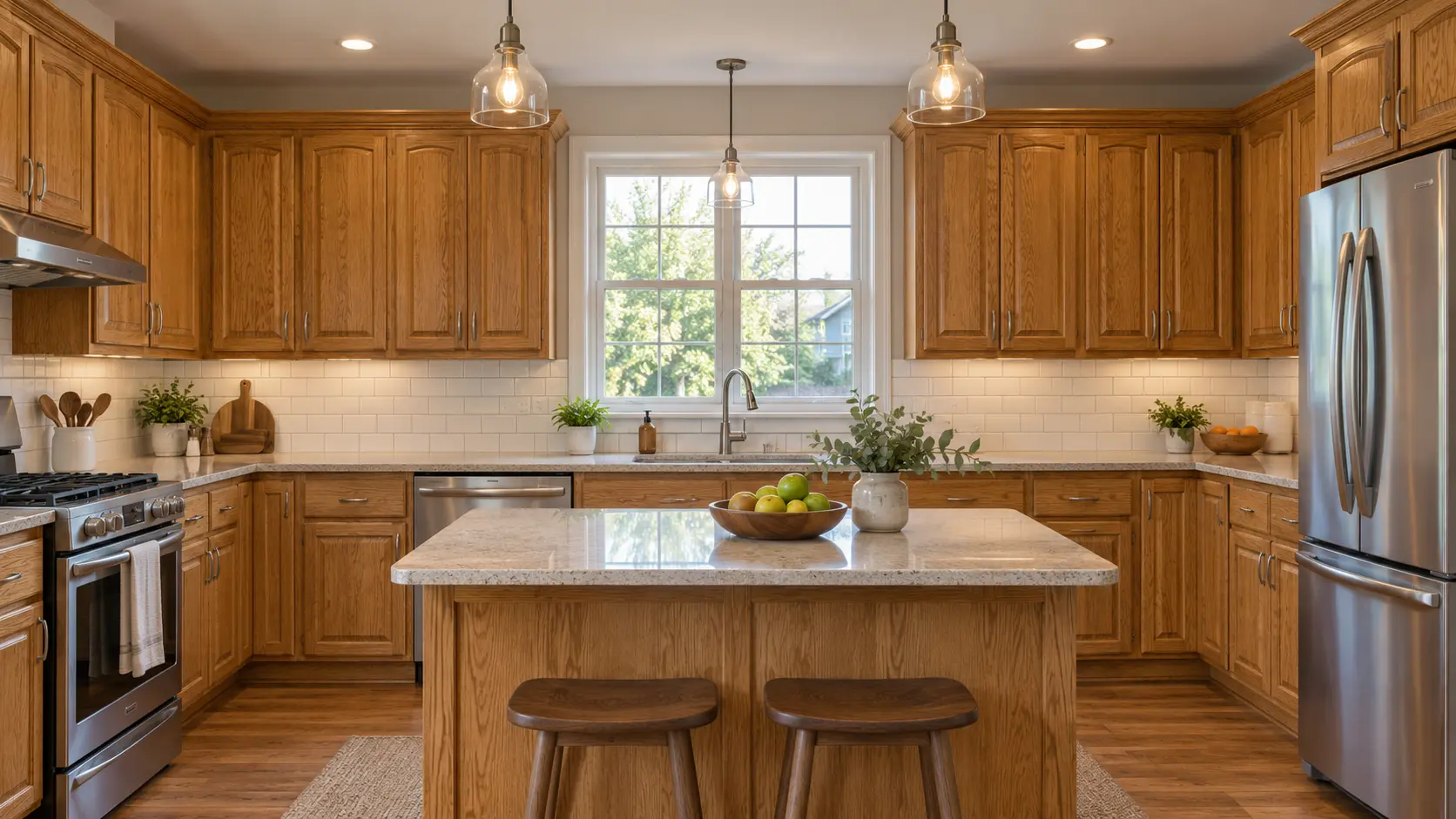
Ask Dani about your wood cabinets →Illustrative kitchen, not a completed restoration project.
Before you decide
Five questions.
Straight answers.
How much gets torn out?
The aim is to keep suitable boxes, doors and the layout. We assess the finish and wear first. Any removal or replacement needed belongs in the written scope.
Will restoration make the wood look new?
We can discuss improving the appearance, but not promise every scratch, stain or faded spot will disappear. Sound cabinets can still have finish problems that need a different approach.
Is there sanding, dust or masking?
That depends on the treatment the existing finish can accept. We explain preparation and protection before work begins. Please do not start sanding, stripping or applying products yourself.
Can I keep using the kitchen?
We agree on access, what needs emptying and which surfaces need protection. Treatment, drying and handling requirements determine what you can use during the work.
Why choose this instead of replacement?
If you like the wood and the kitchen works, restoration may avoid disturbing cabinets worth keeping. It will not fix a poor layout, failing boxes or storage that does not meet your needs.
Compared with a full kitchen gut
Cabinet replacement does not automatically mean a full kitchen gut. A full gut is a broader scope that can involve countertops, flooring, walls, utilities and other trades. Keeping suitable cabinets can limit demolition, but preparation, dust control, protection and kitchen access still need a plan. Your written scope should explain what stays, what comes out and what you can use while the work is underway.
Possible project budgets
$1,500–$3,000 for this cabinet option.
Suitable finish revival and localized repairs while keeping the wood appearance. This is not an allowance for stripping the entire kitchen, major repairs or rebuilding damaged cabinets.
The example: a compact 10-by-10-foot kitchen with roughly 14 doors and 6 drawer fronts, no island, keeping the layout. That cabinet count is our example, not a universal 10-by-10 standard.
How does that compare with a full remodel?
A possible full-kitchen remodel budget for this example is $30,000–$50,000+, allowing for new cabinets, counters, standard appliances, flooring, backsplash and ordinary related trade work. It is a much broader project, with more coordination and potentially more time without normal kitchen access. Cabinet replacement alone does not automatically mean a full gut.
These are proposed planning allowances, not local statistical averages or guaranteed quotes. Cabinet quantities, materials, finish condition, repairs and site access affect the price. Tax, shipping, unusual repairs and exactly what is included must be confirmed in the written quote. Photos start the conversation; measurements, condition and scope determine your project price.
Restoration starts with finding out what can be improved while keeping the wood appearance you want to preserve.
Is restoration right for your cabinets?
It is worth discussing when your cabinet boxes and doors are sound, the layout works, and you want to keep the visible wood rather than change to a painted finish.
The existing finish and the condition underneath matter. Share close-up photos of worn areas along with a few views of the whole kitchen. Tell us about any previous work or products used on the cabinets, if you know.
What stays. What changes.
The aim is to retain suitable cabinets, their door style and the wood look you like. The proposed work depends on what is there now and what the surfaces can reasonably accept. Repairs, hardware, interiors and any parts that need replacement are discussed separately.
If you want a new paint color, compare our refinishing option. If you want a different door style, refacing may be a better fit. Cabinets with serious damage or a layout that does not work need a different discussion.
A clear process
- Look at what you have. Review the cabinet construction, visible wear, existing finish and any known coating history. Photos help us start; an on-site review may be needed.
- Agree on a realistic result. Talk through the wood appearance you want to keep, the areas to address and the marks or color differences that may remain.
- Define the work before treatment. Confirm suitable treatment, preparation, repairs, protection and any removal or shop work in the written scope. Do not start sanding, stripping or applying products before review.
- Review the finished work and care. Confirm any handling or drying requirements and how to care for the agreed finish before returning the cabinets to normal use.
The limits to understand
Restoration cannot promise that every scratch, stain or faded area will disappear. Existing wear, repairs and natural wood variation may remain visible. Matching an aged surface exactly may not be possible.
Older or unknown coatings need review before disturbance. We do not refinish or repaint lead-positive cabinets. Read our cabinet lead policy.
Start with a few photos
Tell Dani your town, what you like about the cabinets and what you want improved. Include overall views and close-ups, without people or personal documents. Carl can discuss whether restoration is worth exploring. Suitability, measurements and a written scope must be confirmed before a final quote.
We also agree what needs to be emptied or protected, what kitchen access you will have during the work, and when surfaces can be handled or used.
Start with Dani →Choose the cabinet conversation and tell Dani you want to keep the wood appearance. Restoration does not have a separate automatic topic.
← Back to cabinet processes